Wednesday, July 31, 2013

Asareca to start climate-smart agriculture in East Africa

 
The Association for Strengthening Agricultural Research in Eastern and Central Africa (Asareca), plans to rollout climate-smart agriculture projects in East Africa starting next year to cope with the effects of climate change on food security.
 
Speaking during a regional workshop on research and policy related to climate change adaptation in sub-Saharan Africa in Nairobi, Hezron Mogaka, manager of natural resources management at Asareca, said farmers in the region risk heavy losses in coming years if they are not assisted to cope with the new climatic trends.
 
“At the moment, our communities have their own traditional ways of dealing with climate change. However, given that it is changing so rapidly, the communities don’t have real mechanisms for adaptations and so the rate at which climate change is changing is faster compared with the rate of adaptation,” Dr Mogaka said.
 
Dr Mogaka said farmers in the region are incurring losses due to crop failure resulting from drought, landslides as well as loss of livestock in Kenya, Tanzania and some parts in Uganda.
 
Climate-smart agriculture, according to the Food and Agriculture Organisation, refers to the “agriculture that sustainably increases productivity, resilience, reduces or removes greenhouse gas emissions (mitigation), and enhances achievement of national food security and the Millennium Development Goals (MDGs)”
 
Whereas UN summit agreed in 2010 to limit the rise in global temperatures to 2 degrees by 2020, there are signs that it could even double, according to the Paris-based International Energy Agency —having a negative impact on not only crops and livestock production but also on the spread of pests and diseases.
 
Officials at Asareca say they plan to mobilise funds for the climate-smart agriculture projects starting next year across the region.
 
The United Nations Framework Convention on Climate Change (UNFCCC) and the World Bank estimate the costs of adaptation at between $41 billion and $170 billion per year by 2030, globally.
 
Adaptation cost
 
In the agriculture sector alone, the annual costs of climate change adaptation required in developing world agriculture as estimated by the International Food Policy Research Institute at between $7 billion and $8 billion per year, while the UNFCCC estimates the costs of adapting agriculture to climate change to be from $11.3 billion to $12.6 billion per year by 2030.
 
The East African nations mainly depend on rain-fed agriculture with over 70 per cent of the population employed in the sector.
 
However, Dr Emma Liwenga, a climate change consultant, said despite extensive climate change adaptation research in the East African region, there is still little evidence regarding how the generated knowledge is made useful or integrated into the agriculture sector.

Uganda to start trials of Genetically Modified Irish Potato


Scientists in Uganda will soon start confined trials of genetically modified strains of Irish potato designed to be resistant to Phytophthora infestans, the fungus that causes potato blight, now devastating the crop in the west of the country.

Dr Andrew Kigundu of Kawanda Agricultural Research Laboratories told The EastAfrican that laboratory tests on the GM potato shows signs of resistance against the disease and it is now time to be transferred to the natural environment for further trials.

“Data from our lab experiments shows that a combination of R-genes from wild potatoes have different levels of resistance to the disease, leading to crop immunity,” said the lead scientist.

Seeking approval

Dr Kigundu added that, with assistance from their Kenyan counterpart, Kenya Agricultural Research Institute, the centre is now seeking approval from Uganda’s National Biosafety Committee to carry out confined field trials. He said two potato varieties, each with 12 lines, have so far been identified for confined field trials.

If approved, the late blight-resistant Irish potato will become the latest crop to undergo trials for the genetically engineered strains in Uganda, even as scientists in the country continue to differ over the proposed law to regulate production and commercialisation of genetically modified organisms (GMOs).

The trials will be conducted at Kachwekano Zonal Agricultural Research and Development Institute in south-western Uganda.

The National Biosafety Bill, which intends to introduce biotechnology seeds and allow commercial release of GM products from ongoing research into the markets, is before parliament.

Uganda has already approved and carried out a field trial on banana to test black sigatoka disease resistance (2007-2009); two trials to evaluate Bacillus thuringiensis  (a naturally occurring soil  bacteria that protects crops against crop pests) and roundup ready cotton (2009-2010); a trial to test cassava mosaic virus resistance (2009-2010); and two ongoing trials to test banana bio-fortified with vitamin A and iron, and also testing resistance to banana bacterial wilt.

Though some of the studies on GM crops have been completed, the crops cannot be released for commercial production.

Causing losses

Abel Arinaitwe, a pathologist at the Kachwekano institute, said late blight is one of the major diseases of economic importance to potato production in Uganda, causing yield losses of 40 to 70 per cent.

Potato blight has rapidly progressed over the potato-growing areas of Kenya and Uganda since it was first reported in East Africa in 1941, according to CropLife Foundation. The disease is greatly affecting Irish potato production in south-western Uganda.

The initial symptom of blight is a rapidly spreading, watery rot of leaves, which soon collapse, shrivel and turn brown.

If unchecked

In humid weather, a fine white fungal growth may be seen around the edge of the lesions on the underside of the leaves.

If unchecked, the disease reaches the tubers, which develop a reddish-brown decay below the skin, firm at first but soon developing into a soft rot as the tissues are invaded by bacteria. Early attacks of blight may not be visible on tubers but any infected tubers will rot in store.

Thursday, July 4, 2013

Uganda’s scientists to use phytoremediation in restoring Queen Elizabeth National Park


Uganda’s scientists plans to restore Queen Elizabeth National Park through planting trees deemed to be resistant to mineral pollutants with a view to maximise their potentials for phytoremediation. 
Phytoremediation is the direct use of green plants and their associated micro-organisms to stabilise or reduce contamination with organic and inorganic pollutants in soils, sledges, sediments, surface water, or ground water. 
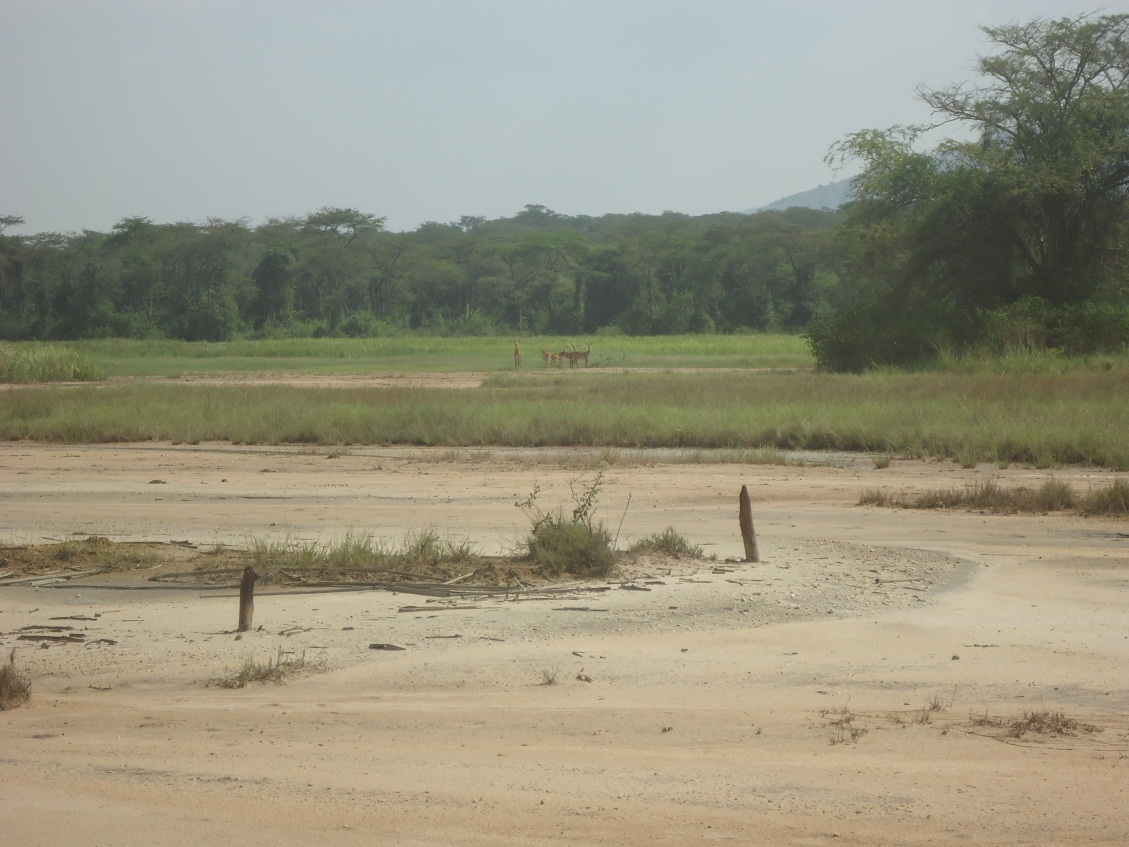
The Lead Researcher, Prof Hannington Oryem-Origa said tree species; Eucalyptus grandis and two legume species; Leucaena glauca and Cassia siamea, are currently under confined trials in the copper tailings dams in Kilembe and in the pyrite trail in Queen Elizabeth National Park both in Kasese District, Western Uganda. 
Eucalyptus trees under confined trials in Queen Elizabeth National Park.
 “These two areas have been contaminated by heavy metals as a result of dumping of wastes generated from the mining of copper from Kilembe Mines between 1956 and 1982. The estimated amount of pollutants dumped in Kilembe area is about 15 million metric tonnes,” Prof Oryem-Origa said.
 Prof Oryem-Origa said conditions in the tailings dams in Kilembe area and the pyrite trail in Queen Elizabeth National Park are acidic and inhibit the growth of ordinary plants.
 The pyrite materials originally consisted of metal suphides which were oxidized resulting in the production of sulphuric acid. The acidic pyrite was then spread into the Park area by storm water and at one time covering a total area of about 150 hectares within Queen Elizabeth National Park, threatening the survival of biodiversity.
 Queen Elizabeth National Park covers 1978 square kilometres, with its position providing a magnificent view of the rift valley floor that occupies Lakes Edward and Gorge.
  The Park is believed to have the highest biodiversity ratings in country with over 500 different bird species and about 100 mammal species.
 According to Uganda Wildlife Authority, Queen Elizabeth National Park is the country’s third highest revenue earner after Bwindi Impenetrable National Park and Murchison Falls National Park in Uganda.
Prof Oryem-Origa said their interest was to use trees of economic value to people which could be periodically harvested and transported away from the polluted habitats while gradually removing the pollutants.
 In addition to growing fast, these tree species can also send deep roots into the soil and extract heavy metals from the polluted habitat as they grow because they exhibit some degree of tolerance or resistance to acidity and drought.
 “It is in the process of repeated tree harvesting that the trees will be taking away heavy metals that include lead, cadmium, copper, cobalt, nickel, manganese and iron among others from the polluted soil and ultimately leading to its restoration to the original state,” Prof Oryem-Origa said.
A section of pyrite trail in Queen Elizabeth National Park in Uganda
 Prof Oryem-Origa added that there will also be an element of phytostabilisation of the polluted soils-a subset of phytoremediation- where growing trees reduce heavy metal mobility by root adsorption and precipitation resulting from growing the pollutant resistant trees.
 Prof Oryem-Origa said if the new technology succeeds, then the planted tree in Queen Elizabeth conservation area will be cut down and completely removed to permit the indigenous vegetation to regenerate in the restored areas.
 The scientists also expect to use the same technology in restoring vegetation in other mineral polluted environments countrywide.
 Though the new development is good news for the restoration of the Park, Uganda Wildlife Authority believes that the selected tree species may not be allowed in the park at the moment as they seem to be exotic.
 “While the development is a good initiative, I am only worried that the proposed plant species seem to all be exotic species and would not be accepted inside the national park,”  said Mr. Charles Tumwesigye, a chief conservation manager at UWA. 
Mr. Tumwesigye said the scientists need to identify indigenous plant species that are resistant to mineral pollutants and they would be happy to work with them.
 In the early 2000s, scientists successfully applied shallow rooted plant species like Spear Grass (Imperata cylindrica), Barmuda Grass or Common Star Grass (Cynodon dactylon), Kodo Grass (Paspalum scrobiculatum), Bulrush millet (Typha latifolia) and Copper ferns in the pyrite trail in Queen Elizabeth National Park to restore the natural vegetation.
 However, the tested shallow-rooted plants improved only shallow depths of the soil in the pyrite trail.
 It is on this basis that Uganda’s scientists have embarked on new technology that could possibly help restore the polluted soil permanently.
 The project is being conducted by Makerere University in collaboration with Sorderton University in Sweden.
 

Wednesday, June 19, 2013

Uganda, Kenya set to release drought tolerant maize varieties for the market


Farmers in Kenya and Uganda could soon start growing conventional drought-tolerant maize once they are approved for commercialisation by the respective regulatory authorities.

This follows several advanced field trials that have been held to test the non-GM maize varieties in Embu, Machakos, Naivasha, and Kakamega in Kenya and Kasese in Uganda.

Counter the effects
Dr Sylvester Oikeh, the project manager, Water Efficient Maize for Africa (Wema) , said one line of the crop is at the final stage of approval and more than 25 others are at different stages of the national performance trials in Kenya compared with eight lines in Uganda.

“The varieties have been undergoing field trials in various parts of Kenya since 2009 and will be available to farmers during the 2013 short-rains season subject to final approvals from the Kenya Plant Health Inspectorate Service,” he said.

He added that like many other countries in Africa, Kenya and Uganda are affected by drought conditions and thus the new maize varieties will help farmers counter the effects that affect their yields.
Maize is the most widely grown staple crop in East Africa.

It is also an important animal feed. According to the National Agricultural Research Organisation (Naro), per capita total maize consumption ranges from 28 kilogrammes a year in Uganda to 125 kilogrammes a year in Kenya.

However, the yields remain low, fluctuating around 1.5 tonnes per hectare in Uganda and 2.3 tonnes per hectare in Kenya, due to a combination of factors including drought, pests and diseases.

Made progress
Dr Godfrey Asea, team leader of Cereals Programme at the National Crops Resources Research Institute, said the drought-tolerant maize in Uganda will either be released to farmers at the end of this year or early next year.

“So far, we have made progress because we now have a number of crops (maize) in the pipeline for release of about eight hybrids lines. They are in the final stages of testing and we hope that the exercise will be completed this year and apply for the release either late this year or early next year,” Dr Asea said.

Release varieties
He added that the release of the new maize variety to the farmers will solve the effects of drought that affects the crops during flowering. Uganda’s Agriculture Seeds and Plant Act requires research institutions to apply for a release of planting materials to the National Plant Variety Committee.

===============================
ABOUT WEMA

The Water Efficient Maize for Africa project aims to address effects of drought and insect pressure in a cost-effective way for smallholder farmers. The goal is to make these varieties available royalty-free through seed companies, with African Agricultural Technology Foundation as the coordinating agency.

CIMMYT and Monsanto are the other partners, working with the Kari and Naro. Kenya produces about 2.7m tonnes per year compared to Uganda’s 1.9m tonnes

The development of drought tolerant maize by WEMA is also being implemented in Tanzania, Mozambique and South Africa

Friday, May 17, 2013

Uganda’s agriculture sector in a crisis

While the Pearl of Africa has always been touted as East Africa’s food basket endowed with beautiful weather; the deteriorating climate conditions and poor investment have suffocated progress in the agriculture sector and condemned it to obscurity in the latter years of independence.
 
For that, stakeholders in the sector now envy the old times because of the high productivity and the support provided to the farmers by the governments that immediately came after self-rule.
 
“In the 1960s and 1970s, we had strong advisory services to guide farmers on the best farming practices; there were strong cooperative societies to market farmers produce, in which quality was not compromised, and there was no corruption as it is today,” Uganda National Farmers Federation President, Charles Ogang, said.
 
Uganda inherited the economy based on agriculture from the colonialists in 1962, consisting of smallholder agricultural exports centered on coffee, tea, tobacco and cotton and the importation of consumer goods for the domestic market.
 
The crops were harvested and sold to the primary cooperative societies or private stores, in which, the primary societies sold the produce to the cooperative unions, and later to marketing boards at a government pre-determined prices prior to the harvest.
 
Coffee, for instance, was sold through the Coffee Marketing Board (CMB) whereas cotton was sold through the Lint Marketing Board (LMB).
 
The policy framework at the time, which was inherited from the colonial administration, emphasized the promotion of commodity exports, external financing to bridge the savings-investment gap, and the promotion of private investment by encouraging existing investors and creating incentives to attract new ones, including African entrepreneurs.
 
In addition, there was also a policy requiring all homesteads to set up granaries specifically to cater for food shortages.
 
And as such, the agriculture sector at the time contributed 46 per cent to the GDP compared to the current 40 per cent.
 
However, following the liberalisation of the economy in the late 1980’ and early 1990’s, the cooperative unions collapsed, leaving every farmer to sell their produce individually, decline in the quantity and quality of produce for export, and the gap created filled with the non-traditional exports-maize and beans among others.
 
The supply chain for the exported crops remained dominated by processing and trading companies.
 
And though the country still relies on the export crops- cotton, tea, coffee- the unstable prices have made them remain uncompetitive at the international markets.
 
Cotton, for instance, which experienced a decline in production in the 1970’s and 1980’s due to political instability and fall in prices, has remained at a low profile whereas tea and coffee has registered a tremendous decline due to climate change, and pests and diseases, and land fragmentation.
 
The production costs, too, have also increased compared to the post-independence days, according to the farmers.
 
“We used to grow maize, coffee, beans among other crops without the use of fertiliser. Nowadays to produce a reasonable output, you need to use fertiliser whose price is not that low,” said Mr. Augustine Labu, a farmer in Bukwo District, eastern Uganda.
 
The crisis in the sector, however, has been escalated by poor road networks and the minimal funding from the government, currently standing at only 5.7 per cent of its $4.5 billion budget for the fiscal year 2012/13.
 
This has made even harder for the few employed extension officers to move to the farmers due to the absence of transport means.
 
Though the government has previous pursued agricultural development policies and strategies – especially the Plan for Modernization of Agriculture (PMA), which was a multi-sectoral framework implemented between 2001 and 2009 aiming at transforming subsistence farming to commercial agriculture, minimal progress has been made.
 
The National Agricultural Advisory Services (NAADS), which was initiated in 2001 as a component of the PMA to necessitate implementation of the programme, failed to deliver the expected results as it was marred with corruption.
 
For instance, in the first phase of NAADS implementation between 2001 and 2007, Uganda spent $108 million in developing agriculture but this investment yielded little as farmers registered insignificant economic gains.
 
Although the second phase was launched in 2009 for a span of five years, estimated to cost $497 million, the programme was again plunged into controversy, misappropriation of funds and failure by the NAADS officials to reach to the farmers.
 
Uganda’s state minister for agriculture, Dr. Zarubabel Nyiira,says NAADS programme had a good intention but it was wrongly implemented by allowing NAADS officials to directly involve in purchasing inputs for farmers.
 
He said the agriculture sector is also facing a threat of a high population growth rate currently standing at 3.5 per cent per annum and expected to reach 50 million by 2025 compared to three per cent growth in agricultural production, a factor that has led to constant food shortages.
 
“Previously, we did not have the effects of drought and climate change because the ozone layer had not been destroyed by fires and carbon emission, we did not have river siltation, as it is today due to flooding which has resulted from land encroachment due to population pressure,” Dr. Nyiira, said adding that government is making efforts to increase investments in the previously powerful sector through provision of education and training services to farmers on the better farming methods.
 
While the Uganda government is encouraging value addition to the agricultural production for exports through a private public partnerships, there’s no serious commitment in ensuring that the processing industries are set up.
 
The Uganda coffee Development Authority, for instance, has laid down plans to set up a coffee processing plant in the next three to five years to add value on the coffee for exports in a private public partnership deal.
 
However, the success of setting up the plant will depend on the interests of the private sector in agro processing due to instability in the production of quality agricultural produce coupled with unreliable energy.
Mr. Gideon Badagawa, the executive director, Private Sector Foundation Uganda said it is only through agricultural modernization and value addition that Uganda will reap from its exports.


While in Uganda during the week of 15th April, 2013, Prof Calestous Juma of Harvard Kennedy School of government, Harvard University, USA said biotechnology will help African countries to lay the scientific and technological basis needed to work not only on agriculture but on other areas of the bio-economy such health, environment and industrial production. ISAAC KHISA caught up with him on the importance of biotechnology in achieving economic transformation and here are the excerpts:


Prof Juma

Basing on ISAAA report for 2012, many developing countries seem to be adopting biotechnology in food production compared to developed countries. What is driving all this, and in any case, is biotechnology a solution to food security in east Africa and Africa as a continent?


The main reason biotechnology crops are being adopted by farmers in developing countries is because they either reduce pesticide use or help in weed control. Biotechnology is a tool for solving specific problems such as pest control and weed management. In helps in reducing the loss of yield due to pests and weeds and as a result helps farmers to increase their harvest. In this regard they can help on one aspect of food security related to increasing production.

But there are other factors that influence food security which include access to food and the quality of what people eat. Access to food is consequence of income and therefore more complex. Farmers who grow biotechnology cash crops such as cotton may increase their disposable income which can used to buy food. But overall food security in more complex and cannot be address by biotechnology tools alone.

If the use of biotechnology or GM foods is the solution to food security in east Africa, why is it taking too long, with the exception of South Africa, Egypt, Burkina Faso, and now Sudan to be adopted in Africa?

The slow rate of the adoption of biotechnology crops in Africa is partly a result of poor investments in agriculture in general. But in some countries the slow rate of adoption is a consequence of either the lack of enabling legislation or the existing or restrictive laws that make difficult and expensive for crop developers to commercialize their crops.

There are claims that biotechnology is an expensive venture for the developing countries especially Uganda. What is your view on this?

The development of any technology involves cost. The failure to develop new technologies also comes at a price. It is estimated that Uganda loses a minimum of US$500 million a year due to banana wilt disease. The spread of banana wilt could have serious consequences for food security and even political stability for Uganda. The cost of developing biotechnology tools to control this disease is negligible compared to the consequences of the destruction of Uganda’s staple crop.

Are we likely to continue solving the same problem of food insecurity in the coming years because as food production increases due to biotechnology, many people are likely to be health and hence increase in population?

More food doesn't necessarily lead to higher population growth. To the contrary, poor nutrition leading to high infant mortality could contribute to high fertility rates as people choose to have more children to increase the chances of survival. Improved nutrition and other measures such as improved health care, education and living conditions are important sources of fertility reduction. The key to managing population is therefore economic growth and agricultural development can help. It is important to stress that these are complex issues that whose outcomes cannot be attributed simply to improvements in food security.

 Issues have been raised over safety GMO foods with claims that it poses health risk to human beings as well as the environment, can you clarify on this?

It is not possible to simply respond to claims. The onus is on those who make the claims to provide evidence of harm. Regulatory authorities will act when such evidence available. But they cannot act on the basis of anecdotal information or mere claims.

 What are the barriers to biotechnology caused by the liability clause in the GM laws, and what need to be done to encourage research and commercialization of biotech crops in East Africa?

Restrictive liability clauses assume that the products are harmful without prior evidence. They are extremely harmful to the development of the biotechnology sector. This is not say that there should be no liability for faulty products but such laws should be discriminate against certain products.

 A number of countries in Africa are now producing biotech foods. In your view, what is the future of GM foods in East Africa and the entire continent?

Biotechnology crops will be adopted in steady and measured way that reflects local realities. What is interesting is the development of biotechnology crops that address African challenges such as disease, drought, pests and weeds. This is every encouraging and shows that African scientists are using the technology to respond to local challenges.

 What are the other underlying benefits for adopting biotechnology apart from farming?

The adoption of biotechnology will help African countries to lay the scientific and technological basis needed to work not only on agriculture but on other areas of the bioeconomy such health, environment and industrial production. By slowing use of biotechnology African countries may be undermining their own ability to build foundations for other technological advances.

And lastly, what are your suggestions for those opposing the adoption of GM crops/food in East Africa?

Every new technology raises concerns and these needs to be openly and democratically debated. For this reason open dialogue is an important aspect of the evolution of new technology. It is important for African countries to create institutional structure through which such debates can occur based on evidence. It is for this reason that adopting biotechnology policies that advance the technology which providing safety measures is an important starting point in managing public debates. END

Cassava breeding, production project to get $25.2m fund boost


The Bill & Melinda Gates Foundation and the United Kingdom’s Department for International Development (DfID) are investing $25.2 million to support a five-year project that seeks to improve breeding and productivity of cassava in sub-Saharan Africa.


The project dubbed Next Generation Cassava Breeding will be hosted by Cornel University, in the United States, together with five other partner institutions, including the National Crops Resources Research Institute (NaCRRI) in Uganda, and the National Root Crops Research Institute (NRCRI) in Nigeria.


Other partner institutions include the International Institute of Tropical Agriculture (IITA) in Nigeria, Boyce Thompson Institute for Plant Research in New York, and the US Department of Energy Joint Genome Institute of the Lawrence Berkeley National Laboratory in California.

Ronnie Coffman, Cornell University professor of plant breeding and genetics, is the principal investigator of the multi-partner grant.

Yonah Baguma, the project co-ordinator for NaCCRI in Uganda said: “Increased support for strengthening the research capacity in Africa and harnessing novel technologies is critical to improving overall agricultural productivity and food security for poor people.”

Uganda is currently working on a number of projects including the development of cassava resistant to mosaic virus disease and cassava fortified with vitamin A.

The partners will share cassava data, expertise, and information publicly on a website being developed by Lukas Mueller of Boyce Thompson Institute for Plant Research in New York.


The researchers will use the latest information from cassava genome sequencing to improve cassava productivity and yields by shortening the cassava breeding cycle from almost a decade to as little as six years, in addition to training the next generation of cassava breeders, improving infrastructure at African institutions, and holding awareness-building workshops for farmers, scholars, researchers, and policy makers.

Significant plant

According to the United Nations Conference on Trade and Development (Unctad), smallholder farmers in Africa produce more than half of the world’s 250 million metric tonnes of cassava per year, a tough woody plant predicted to be one of the few crops that will benefit from climate change.

Currently, some 500 million Africans consume cassava freshly boiled or raw on a daily basis, and the plant also serves as a low-cost source of carbohydrates for animals.


“Next generation cassava provides a great opportunity for us to harness the power of modern science for faster delivery of best-bet cassava varieties for smallholders
Cassava breeding, production project to get $25.2m fund boost der farmers,” said Chiedozie Egesi, assistant director at NRCRI and head of cassava breeding, who works to biofortify cassava with essential micronutrients to make it more nutritious.


Peter Kulakow, a cassava breeder and geneticist at International Institute of Tropical Agriculture said the project will not only give breeders in Africa access to the most advanced plant breeding technologies to deliver improved varieties to farmers more rapidly, but also ensure that cassava genetic research is at par with other top food crops such as wheat, rice, maize and potato.